

Find the BPM and key of any song. Drop an MP3 or WAV and get the tempo, the key and its Camelot code, then play it back with a click track to check the beat by ear.
BPM stands for beats per minute: how many steady pulses, the ones you tap your foot to, fit into one minute of a song. It is the standard way to state tempo, so 60 BPM is one beat per second and 120 BPM is two.
Most pop and dance music sits between 100 and 130 BPM. Hip-hop usually runs slower, around 85 to 100, while drum and bass races along at 160 to 180.
Knowing the BPM lets a DJ beatmatch two tracks, a producer set the project tempo before sampling, a runner choose songs that match their stride, and a songwriter give a band or an AI song generator an exact tempo.

This BPM finder does everything in your browser tab, from decoding the file to marking each beat.
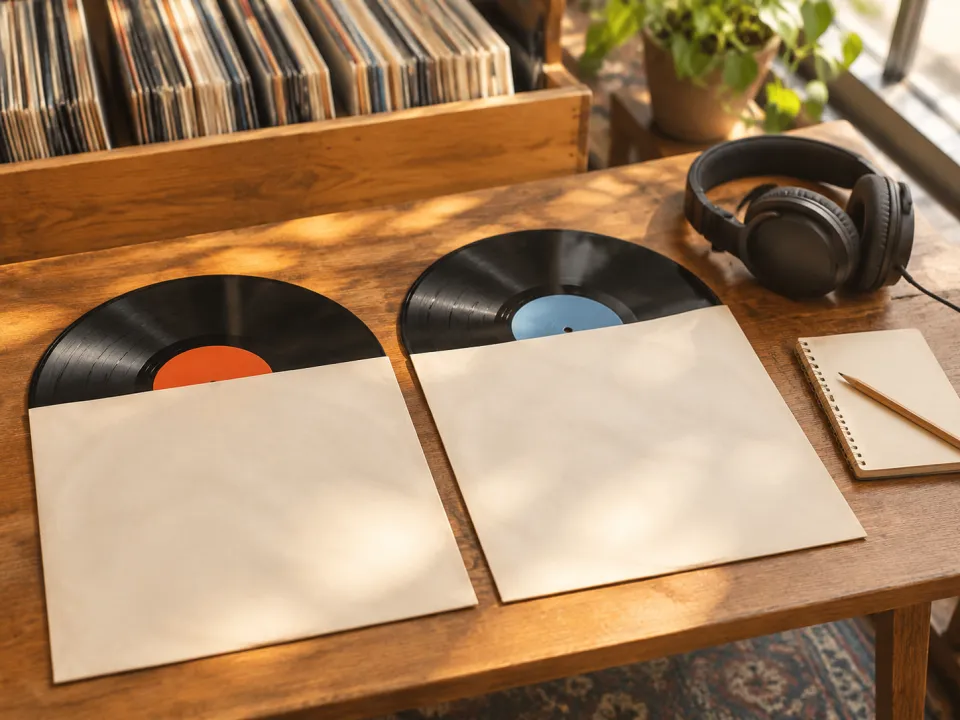
Next to the tempo you get the key of the song, written as a note name such as A minor and as a Camelot code such as 8A, plus its relative major or minor. That is all you need to line up the next record in a harmonic mix, or to pick samples that fit.
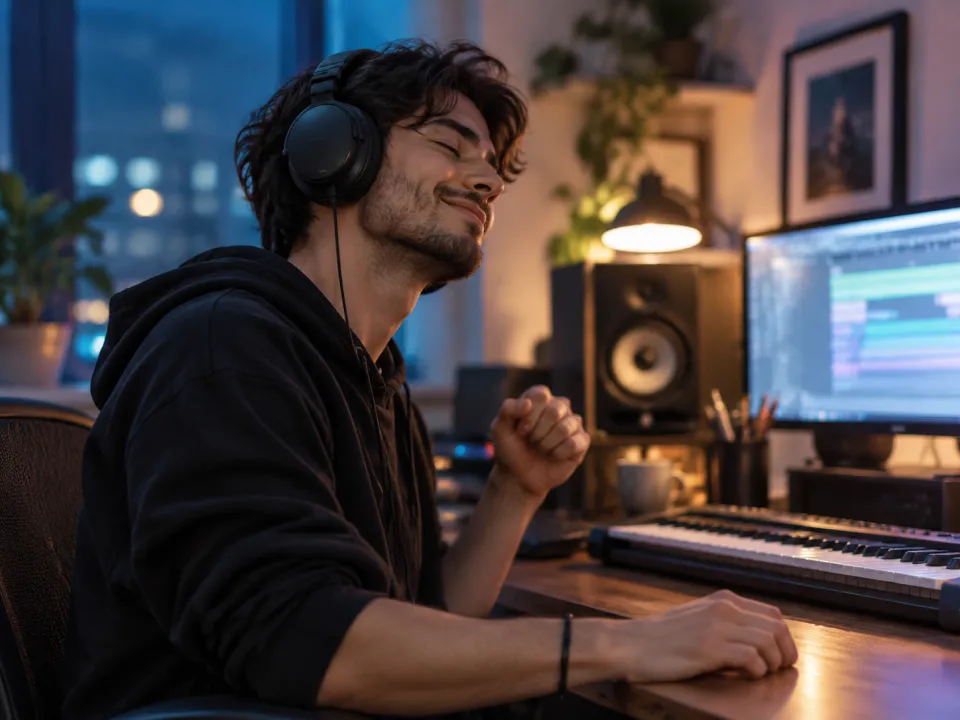
Drop an MP3, WAV, FLAC, M4A, AAC or OGG file into the BPM finder and play it back with a click track laid on the detected beats. If the clicks sit on the kick and snare, the reading is right; if they run twice as fast or half as fast, switch to half or double time with one tap.
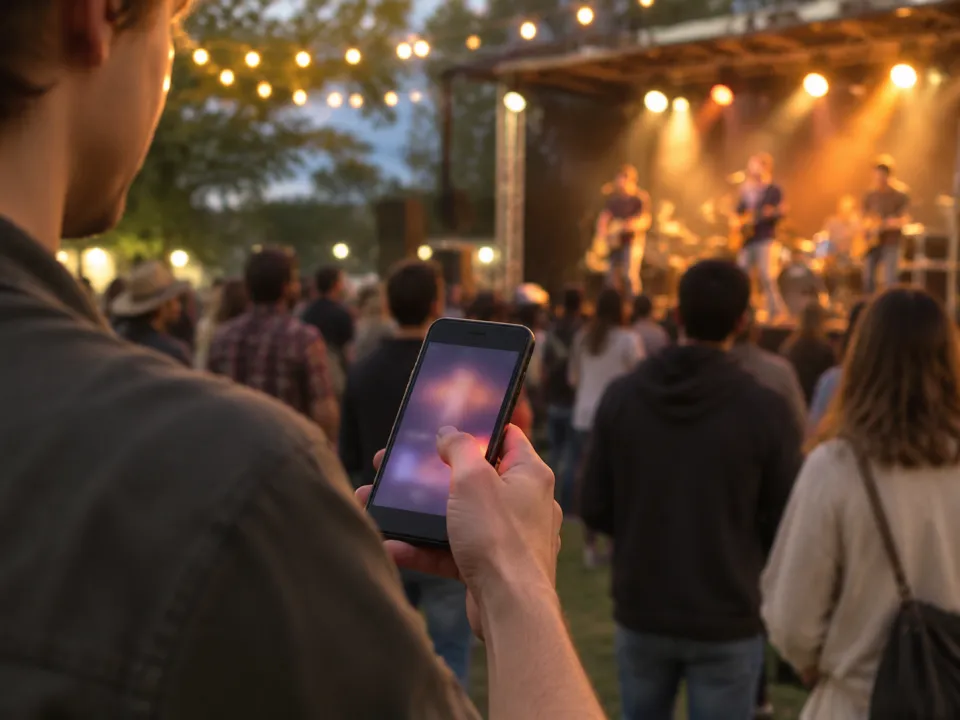
Hearing a song on the radio, in a shop or at a gig? Tap along on any beat and the reading averages your last dozen taps, so ten steady seconds of tapping is enough for a solid reading.
Tap TempoThree steps in the BPM finder, whether it is your own mix or a track you are about to play out.
Pick an MP3, WAV or other audio file up to 10 minutes long. The audio stays in this tab, and the analysis runs on your own computer or phone.
The BPM finder measures how often strong hits repeat, maps every beat, and reads the key from the notes that sound most across the song.
Play it with the click track, switch to half or double time if the clicks feel off, then set that BPM and key in your DAW, DJ software or next song.
On songs with a steady drum beat, this BPM finder gets the tempo right to the nearest whole BPM, and the key usually matches what a musician would name by ear. The click track is there so you never have to take that on trust.
The usual miss is not a wrong number but a doubled or halved one. A trap beat at 140 BPM with half-time drums feels like 70; a hip-hop track at 85 with busy hi-hats can read as 170. Both describe the same grid, which is why half and double time are one click away.
Songs that speed up, rubato piano and live drummers without a click get one overall figure: the tempo that dominates the track. Keys are harder to call when a song sits on a single chord or hovers between a major key and its relative minor; there, the relative key shown beside the result is worth trying.
A quick sanity check: if a reading lands far outside its genre's range, try half or double time.
| Genre | Typical BPM | Can also read as |
|---|---|---|
| Lo-fi hip-hop | 70–90 | 140–180 with busy hi-hats |
| Hip-hop, boom bap | 85–100 | 170–200 with 16th-note hi-hats |
| Trap | 130–160 | 65–80, the half-time feel |
| Reggaeton | 90–100 | Rarely misread |
| Pop | 100–130 | Double on slow ballads (60–80) |
| House | 120–130 | Rarely misread |
| Techno | 125–145 | Rarely misread |
| Dubstep | 140 | 70, the half-time feel |
| Drum and bass | 160–180 | 80–90 when the breaks are sparse |
The Camelot wheel gives each of the 24 keys a number from 1 to 12 and a letter: A for minor keys, B for major. Neighbors on the wheel share most of their notes, so DJs use the code to pick tracks that blend without clashing.
Three moves are safe: the same code, one number up or down with the same letter, or the same number with the other letter. A track in 8A (A minor) mixes into 7A (D minor), 9A (E minor) or 8B (C major).
For producers, the key tells you which samples, loops and vocals will fit without retuning, and how far to transpose one that does not.
Each one runs on a song you made or hold the rights to.
Describe a song with the BPM and key you want, and the AI song generator writes, sings and produces it.